FleetSmart Optimisation Platform


Customer
A leading innovator in the commercial vehicle industry, the company is known for its diverse range of trucks, buses, vans, and engines. With a strong focus on sustainability and progressive technology, they are driving advancements in areas like electric mobility and autonomous vehicle solutions, positioning themselves as a forward-thinking player in the market.
Challenge
The customer faced growing demand to improve operational efficiency and reduce vehicle downtime across its expanding fleet. Some of their existing systems relied on disconnected tools, leading to inefficiencies in data collection, delayed maintenance interventions, and suboptimal route planning. Additionally, the lack of scalability meant the system struggled to support real-time analytics and future technological upgrades. They needed an integrated solution to unify operations, scale with their growth, and incorporate predictive capabilities to reduce costs and improve service delivery.
Solution
TechHive, in close collaboration with the customer’s in-house teams, crafted a comprehensive fleet management solution that combined advanced technologies with a user-centric design to meet the customer’s objectives. Key aspects included:
IoT Integration: Implemented MQTT protocols for real-time data exchange between vehicles and the cloud. Sensor data, such as engine diagnostics, fuel consumption, and GPS location, was collected and standardised into a unified format for seamless processing.
Data Pipeline: Built a robust data handling ecosystem using Apache Spark for batch processing and Apache Kafka for stream processing. This dual-layered approach allowed for high-velocity real-time data streams and efficient historical data analysis.
Predictive Maintenance Engine: Developed machine learning models using Python (TensorFlow and scikit-learn) trained on over three years of historical data, supplemented with real-time vehicle sensor inputs. These models were validated through pilot testing on 500 vehicles, achieving a predictive accuracy rate of 92%.
Scalable Cloud Infrastructure: Designed a cloud-native architecture on AWS, leveraging Lambda for serverless execution, DynamoDB for low-latency storage, and S3 for secure, cost-effective archival of historical data. Redundant systems were implemented to ensure high availability.
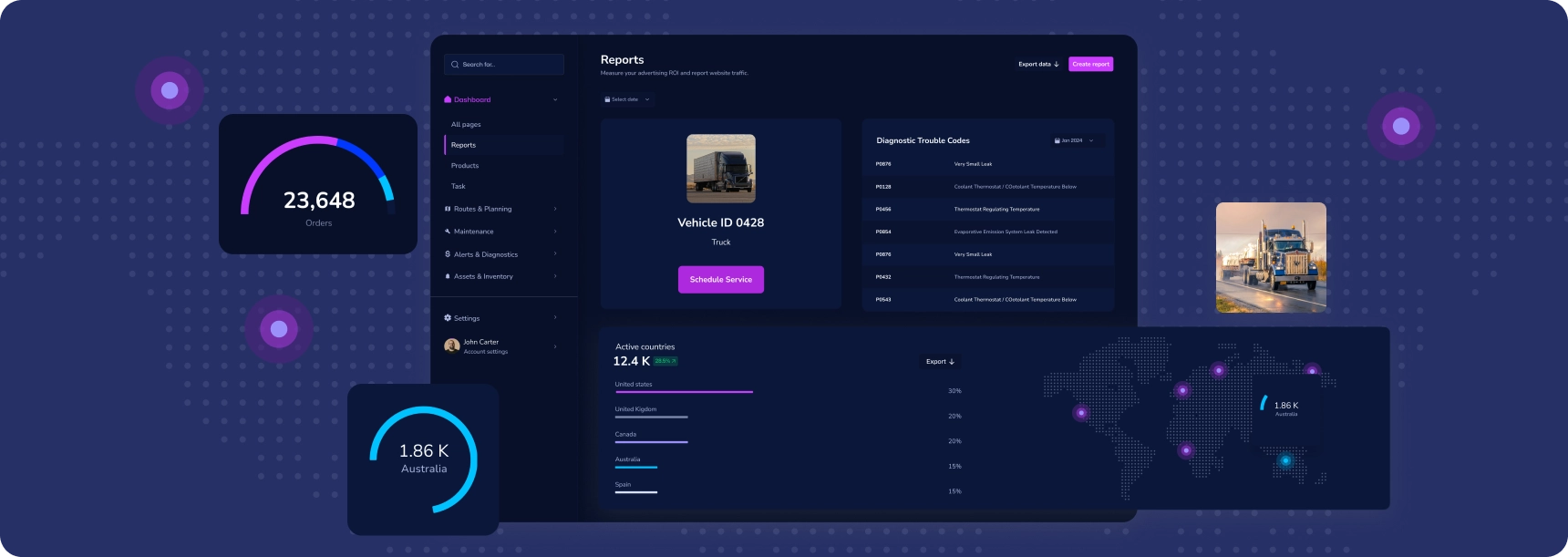
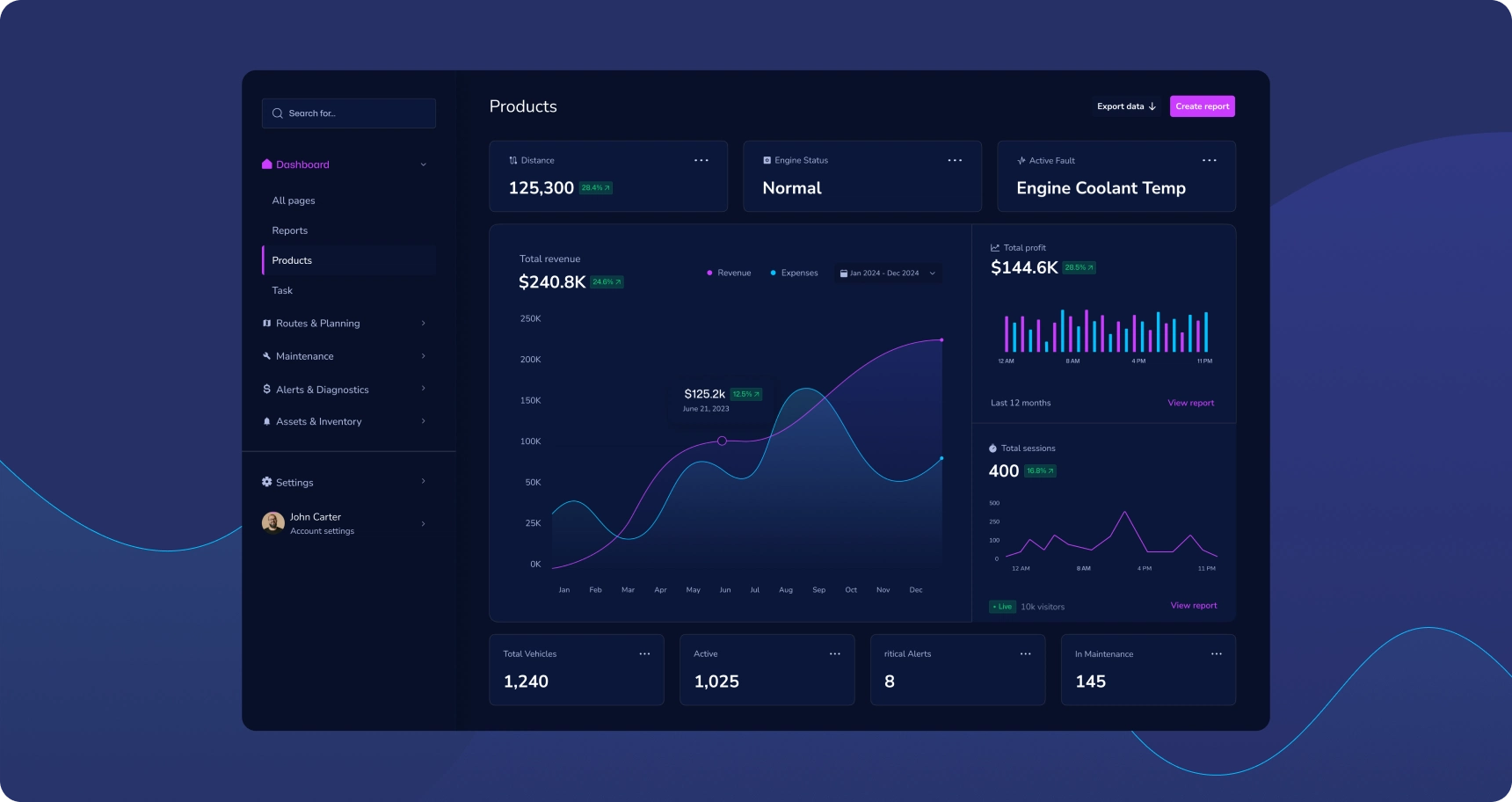
User Experience Design: Created a React.js-powered dashboard with a focus on usability, offering fleet managers real-time updates, customised reporting tools, and predictive insights at a glance. Advanced filters allowed users to drill down into specific vehicle groups or maintenance schedules.
DevOps and CI/CD: Established a continuous integration/continuous deployment pipeline using Jenkins and Kubernetes, ensuring fast, reliable updates and high system availability.
Security Enhancements: Adopted end-to-end encryption, regular penetration testing, and role-based access controls to safeguard sensitive fleet data and operational insights.
Validation and Testing: Conducted extensive pilot testing across a subset of vehicles to validate system reliability and accuracy. Feedback loops were implemented to collect insights from fleet managers, so the functionalities could be fine-tuned and the user experience optimised. Testing phases included stress tests to ensure scalability for up to 20,000 vehicles.
Customer Collaboration: Worked closely with the customer’s in-house teams, including fleet operators and IT specialists, to align development with operational needs, ensuring seamless knowledge transfer and long-term adoption of the platform.
References
Result
- Vehicle downtime was reduced by 30% due to proactive maintenance and real-time issue detection.
- Route optimisation led to a 25% improvement in fuel efficiency and delivery schedules.
- Maintenance costs decreased by 15% with early fault detection and intervention.
- Fleet managers reported a 40% boost in operational visibility and decision-making efficiency.
- The scalable design ensured smooth integration of new devices and capabilities as the fleet expanded.
- The project was successfully delivered in a phased approach over 12 months, with incremental rollouts enabling early testing and adaptation.
Schedule your free consultation

We will contact you shortly.